Built in 1929, the stately brick building at 1001 North Street near downtown Durham has served many purposes. From offices to a residential community for people battling addiction, now it is returning to its original use as a school.
Students from the Central Park School for Children now fill the building’s classrooms and hallways. The charter school, founded in 2003, already had another building roughly a quarter mile away. Two years ago, the school’s foundation decided to buy the North Street property to supplement that space. Despite the higher cost of downtown real estate, the school believes in the values of “New Urbanism” – a development approach that “unleashes human connection, health and well-being,” according to the school’s website.
Arlie Harris, the school’s executive director, said the new addition quickly and seamlessly transformed into “a center of community”.
Originally, the building was constructed as an addition to The North Durham Graded School, which was built in 1901, according to Open Durham. In the 1970s, that school closed, and the building was repurposed as offices for the public school system. Not long after, TROSA, a substance abuse rehabilitation organization, took it over, turning classrooms into dormitories for recovering addicts.
To return the building to its original purpose was no easy feat. Harris said the school made extensive efforts to modernize, investing millions of dollars to align it with its values of inclusion. A state-of-the-art elevator was lifted in through the roof to ensure accessibility throughout the building. The school also implemented a “social, emotional learning hub,” a soundproof area for those with sensory difficulties.
The building’s amphitheater has been brought back to life and now serves as the beating heart of the school. Named the Teaching and Learning Center, the room hosts math classes, study periods, musical and theatrical performances, and parent conferences. In keeping with the school’s community-centered mission, Harris said the room has also become a “community space” for local gatherings and meetups.
The school also made sure to keep elements of the building’s historic charm and unique architectural qualities. Original chalkboards remain in some classrooms, and the walkways are the same ones students like Diana Bello walked across more than 70 years ago.
“This was just a wonderful school,” said Bello, who went to school in the building in the 1950s and came back to tour the new space. “Looking outside right now at that playground, I remembered playing out there.”
Bello told The 9th Street Journal that she used to live one block away, and that her own grandson attended school there, too. Bello described returning to the building as “a very emotional experience.”
“I had funny stories, I had sad stories, all sorts of feelings,” she said. “I’m just so proud. I’m so proud of [the school staff] for doing what they’re doing.”
The school wants to welcome back more alumni, and Bello is trying to help with that effort by connecting with former classmates through a Facebook group called Growing up in Durham.
“I’ve got to find a way to get them enough people so we can do a tour for them,” she said.
Given the building’s history and longstanding place in Durham’s culture, Harris wants to ensure students take advantage of their centralized location and ground themselves in their surroundings and local community.
“It’s important to know about where you’re from and where you are located and where you’re oriented in the world,” she said.
When children arrive at the CPSC, their parents are asked to fill out permission slips so they can walk around the neighborhood.
“Old North Durham is part of our community, and so we all interact with each other,” Harris said.
With the new addition to the school now behind them, school leadership is already looking toward the next big projects. Their efforts to modernize are not stopping any time soon, as they continue to bring their policies of hands-on, project-based learning to life. The school is in the process of adding an outdoor classroom, equipped with a kiln for art classes.
As the Central Park School for Children evolves, alumni like Bello are excited for the impact it will continue to have on students and the community.
“This building has always held a special place in the heart of North Durham,” Bello told the school for a press release marking the occasion. “Bringing it back to life as a school honors its history while ensuring future generations have a place to learn, grow and thrive.”
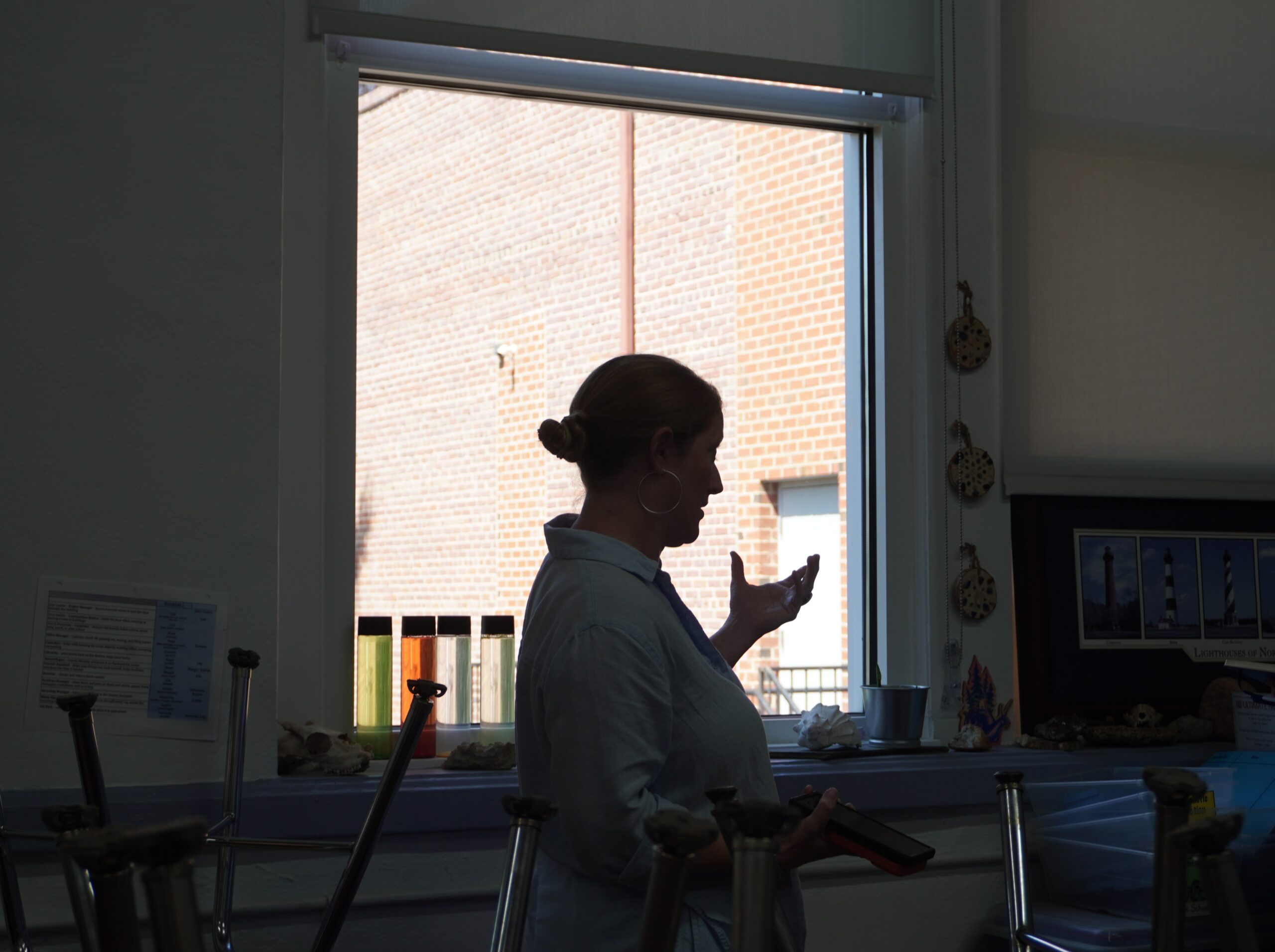
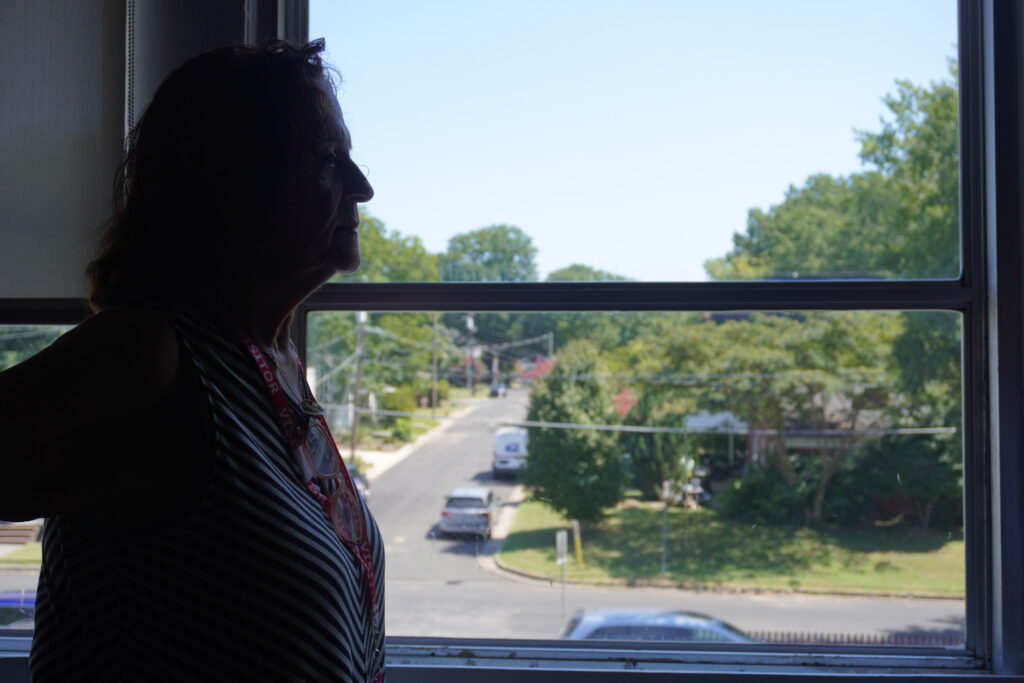
Photo at top: Central Park School for Children Executive Director Arlie Harris in a classroom at 1001 North Street. Photo by Jo Lee – The 9th Street Journal
Gemma Tutton