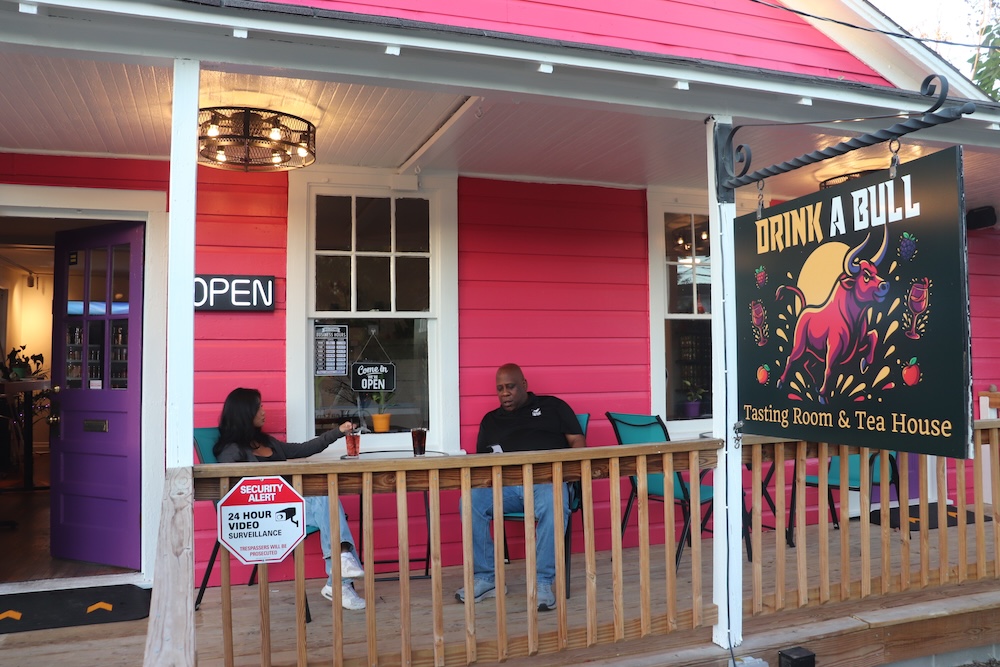
Eddie Zimmerman, a 76-year-old winemaker, had his first drink at age six. His son Andrew Zimmerman—who co-founded the fruit winery and tasting room Drink A Bull with his wife Allison Zimmerman—had his first drink at age 12. Neither was “sneaking around,” they told me. In Valdese, North Carolina—the largest settlement of Waldensians in North America—wine is “just part of the community and culture.”
The Waldensians are part of a Christian reform movement that originated in 12th century France. When the Zimmermans opened Drink A Bull’s Tasting Room and Tea House in Old West Durham in June, they drew on both their upbringing and 90-year commercial lineage rooted in the winemaking traditions Waldensians brought to Valdese.
In Valdese, a small town in Burke County about 160 miles west of Durham, there is wine wherever people gather. Andrew recalled going to the basements of older Waldensian men to “sit down and have a drink,” even as a child. An invitation to the home wine cellar was a sign of friendship.
“If they didn’t show you their wine cellar, they may not have liked you very much,” Eddie told me with a glimmer in his eye.
Waldensians were proud to share the wine they had made. “That’s the reason I’ve drunk vinegar,” Andrew joked.
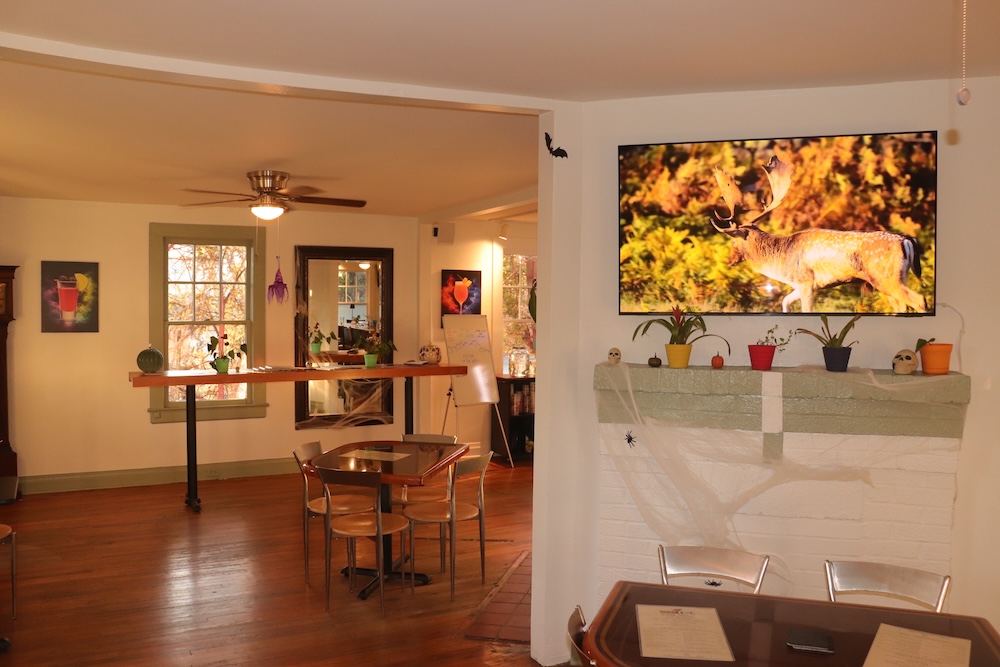
Drink A Bull looks like something between a bar, cafe and home. When I arrived at Drink A Bull to find the Zimmermans sitting outside on the front porch, I was reminded that this is a family-owned business. Both father and son wore black polos—Andrew’s with a “Drink A Bull” emblem and his father’s with “Waldensian Wines.” Allison stood out with her smart dress and bright red earrings.
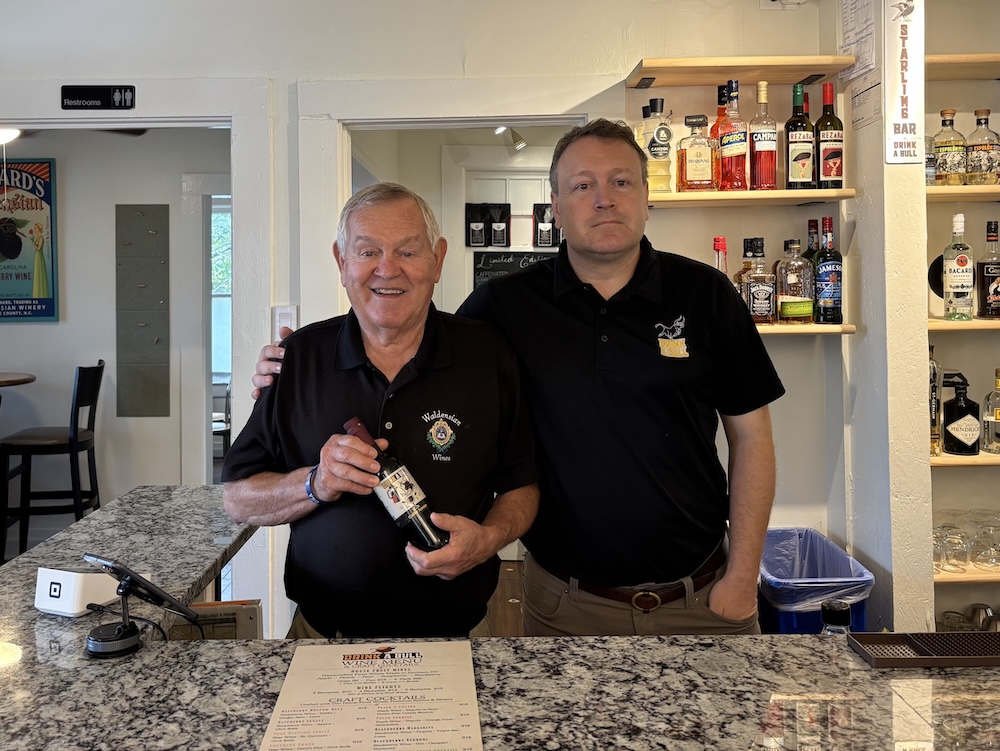
They led me inside to sit at the marble bar top, facing an open area with seating and tables. Some of the shelves stored canned wines; others stored board games. In the back room, the Zimmermans framed documentation of the original winery and portraits of the founders dating back over 90 years.
The original winery in Drink A Bull’s commercial lineage was founded by Mellie C. Bernard in Burke County in 1933. Bernard, a Sicilian immigrant, embraced the local Waldensian winemaking culture. Bernard’s winery closed in 1948 after local prohibition action; his son, Mellie Jean Bernard, estimated that around 60,000 gallons of wine were turned into vinegar. Mellie Jean revived his father’s wines in 1983, and the business was eventually acquired by Eddie and Brenda Zimmerman in 2008. In 2021, their son Andrew and his wife Allison founded Drink A Bull as a separate business, carrying forward their fruit-wine tradition in Durham. The wine is made in Durham, in a production facility on Holloway Street.
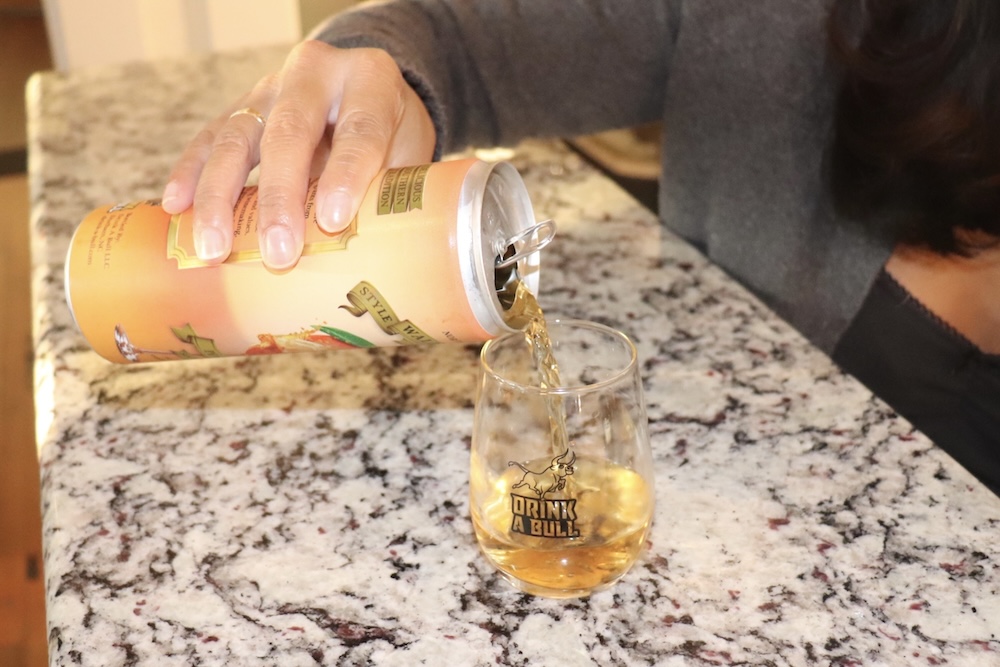
As the father-son duo tag-teamed in explaining this history, Allison popped open their canned fruit wines and poured me a flight: peach, apple, blackberry, raspberry, pear. They sparkled in the light. Even Eddie, passionate as he was in his delivery, halted mid-sentence to hold a glass up and admire its sheen. I took a sip; each drink tasted cold, sweet, and more concentrated than juice.
“The goal is for it to taste like it’s right off the vine,” Allison told me.
Fruit wine—the staple item at Drink A Bull—shows how Waldensians adapted their home winemaking practices to North Carolina soil. When the Waldensians first immigrated to Valdese in 1893, they found that their grapevines would not grow. So they used whatever they could find in North Carolina: apples, peaches, blackberries. Unlike many European or California wines, these fruit wines are not meant to be aged but “wish to be drunk.”
Barrett “Bear” Bennett, the head bartender at Drink A Bull, shared that their drinks have a “totally different vibe” from anything he ever served at other bars: mostly beer. At Drink A Bull, Bear experimented mixing wine and club soda, or reinventing the Moscow Mule in different flavors.
“At most bars, people drink until they can’t drink anymore,” he said.
I asked Bear about his first drinking experience. He remembered having a bad day, and his friends inviting him out to drink. I asked how the experience was.
“I don’t remember,” he told me, and let out a guffaw.
Drink A Bull, by contrast, is more “laidback.” People can come in to study, and have a glass of wine or cup of tea.
“It’s here to meet people and relax,” Bear said.
Waldensian drinking culture sits in tension between two opposing sides: “party culture,” as Andrew puts it, and prohibition, as historically advocated by their Christian neighbors. In part through Southern Baptist and Methodist leadership, North Carolina became the first state in the nation to approve statewide prohibition by popular vote in 1908. Waldensians kept wine alive by making wine in their homes. However, the Zimmermans also insisted that drinking is not about getting drunk.
“I’ve got big ears,” Eddie told me. When I asked what he meant, he explained: “If my ears get warm, I quit. It’s just the culture in our town.”
In many Christian traditions, drinking is not inherently a “sin” but is often viewed with caution. Like any good, alcohol can become sinful when it becomes excessive—when it commands a devotion that rivals one’s devotion to God.
The Zimmermans share this sense of caution. But having grown up in the Waldensian community, they are less concerned with how wine can be abused and more on how it should be used. Andrew recalled how every Sunday, after church, his Waldensian neighbors brought cheese, crackers and board games to someone’s winery to talk and hang out. Wine was the payment for cleaning the neighbor’s pool, the alternative to water at the dinner table and the sign of new friendship.
“To boil it down, it means community,” he told me.
For his father, this has everything to do with his faith. “It’s something that you have a personal attachment to, that you share with your friends and your neighbors.”
The Zimmermans brought this vision of wine from Burke County to Durham. But the move has not been easy.
“As we’ve moved into Durham, no one is familiar with the Waldensian culture,” Andrew shared.
Keeping the culture alive, in accordance with Waldensian tradition, requires a delicate balance between preservation and adaptation. To store their fruit wines, for instance, Andrew developed stainless steel cans. The steel prevents light exposure without contaminating the taste of the wine.
“Wine remembers everything it ever touched,” Eddie explained. “We’re trying to keep it very fresh and true to the fruit itself.”
He reminded me that it was their passion for the wine that started Drink A Bull, but also their passion for Waldensian culture.
“It’s very important for us to keep it alive, keep the tradition of winemaking going,” Andrew added. “And to make sure that it doesn’t simply—die.”
Photo at top: Drink A Bull is located at 1806 W. Markham Ave., just across from Duke’s East Campus. Photo by Miye Sugino — The 9th Street Journal
Miye Sugino