Editor’s note: After the publication of this story, Nida Allam issued a statement Wednesday night conceding the District 4 Congressional District race to Rep. Valerie Foushee.
With all precincts reporting, incumbent Valerie Foushee had a slim 1,202-vote lead over challenger Nida Allam for the Democratic nomination in North Carolina’s 4th Congressional District. But the race was so close—less than 1 percentage point—that Allam said there will be an automatic recount.
Shortly after midnight, Foushee had 61,537 votes to 60,335 for Allam. Mary Patterson trailed with 3,253.
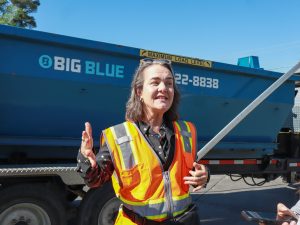
“What a night, y’all,” Allam said in a brief speech to supporters at a Durham club. “We are within 1%, which means we go into an automatic recount.”
She added, “Tomorrow, we get back to work. But for now—I don’t know about y’all—but I think this moment needs a full night of sleep.
Foushee didn’t acknowledge the close race, nor the recount. She issued a statement that essentially declared victory. “I am incredibly grateful for the outpour of support from my constituents across the 4th District. Serving this district in Congress is my highest honor, and I am deeply humbled to have the opportunity to represent this district for another term.”
Unofficial results showed each had slight leads in their home counties. In Durham, Allam was ahead by 2,712 votes. In Orange, Foushee was up by 2,284 votes. Allam won the portions of Wake that were in the district, but not enough to overcome Foushee’s lead in the Chatham County portion of the district.
State election rules say that candidates have the right to request a recount if the difference between the winner and loser is less than one percentage point. The request must be made to the county board of elections by 5 p.m. on the next business day after the canvass.
The winner is likely to prevail in the November general election because the district is heavily Democratic. Foushee has held the seat since 2022, when she was also challenged by Allam and won by 9 percentage points.
Back then, Foushee got a boost from more than $2 million in support from the American Israel Public Affairs Committee. But for this election, Foushee vowed not to take any AIPAC money.
This year’s race attracted millions of dollars in ads from PACs and super PACs, which echoed the talking points of the candidates. It became the most expensive primary race in the state for outside spending.
The candidates agreed on many issues. Both promised to stand up to the Trump administration in Congress; both said they want to impeach Kristi Noem, the homeland security secretary; and both supported progressive issues such as Medicare for all, protecting voting rights, and reproductive rights.
While Foushee, a former state legislator from Chapel Hill, emphasized her experience and maintained a low-key approach, Allam attacked Foushee for being “in the pocket” of defense contracts, banks, pharmaceutical companies and “Big Tech.”
Allam was endorsed by Bernie Sanders, the People’s Alliance PAC and some members of the Durham City Council. Foushee was backed by a host of Democratic elected officials, including Gov. Josh Stein, former Gov. Roy Cooper and Durham Mayor Leonardo Williams.
Staff writer Gabrielle Lazor contributed to this report.
Photo at top: Nida Allam addresses supporters on Election Night. Photo by Reece MacKinney, The 9th Street Journal
Paige Stevens