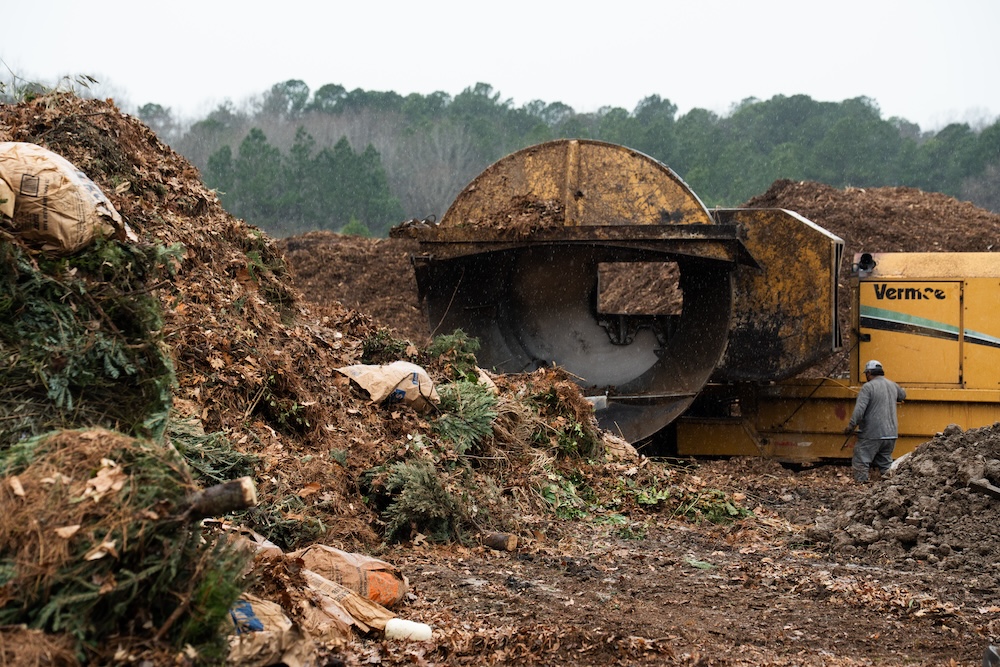
By the time the grinder shut down at 11:50 a.m. on Wednesday, only one Christmas tree was left.
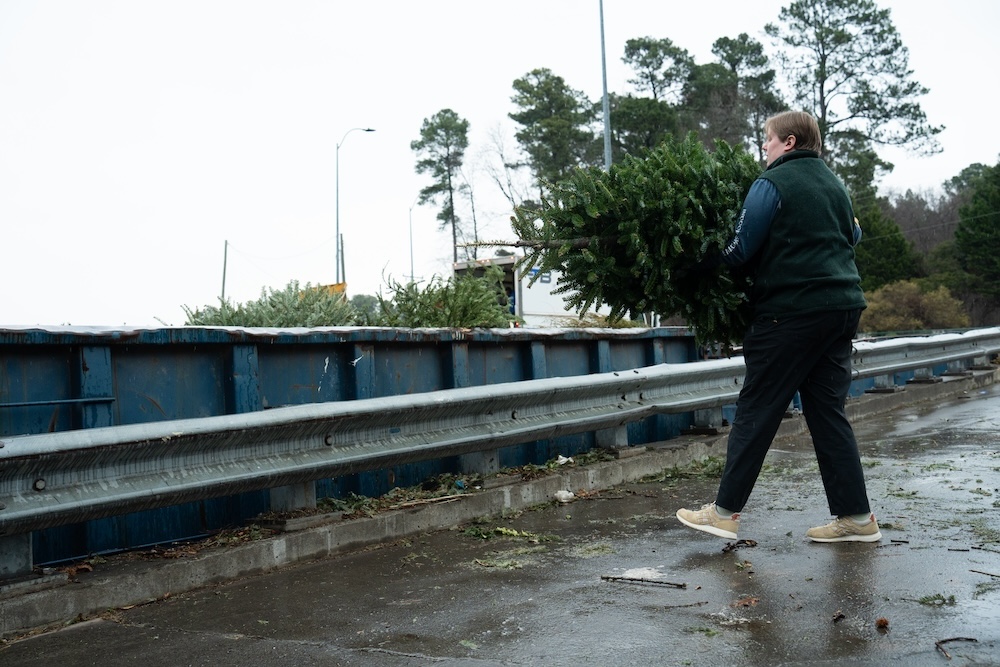
It lay on its side at the edge of the Waste Disposal and Recycling Center on East Club Boulevard, its needles dulled and branches splayed, waiting. The massive pile that had stood there earlier — dozens of discarded firs and pines — was gone, reduced to fresh mulch stacked in low mounds nearby.
This is Christmas tree disposal season in Durham, the brief window in January and February when city workers collect and process thousands of trees shed after the holidays. It’s a short, intense operation that most residents glimpse only when a tree disappears from the curb. Behind the scenes, it’s a carefully choreographed system that runs for weeks.
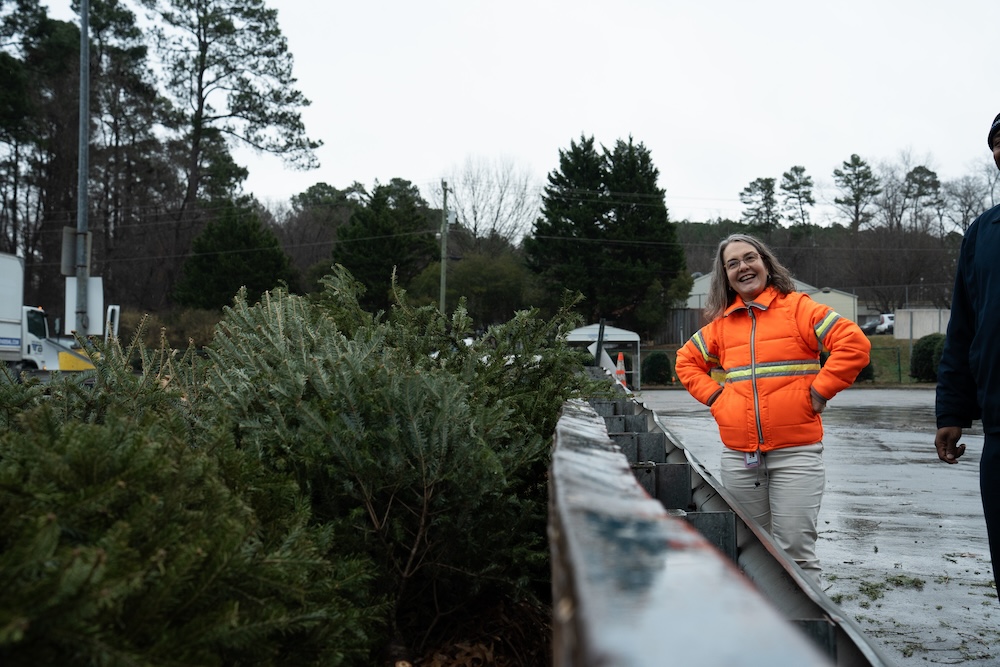
At the city’s Waste Disposal and Recycling Center, Muriel Williman, 57, senior assistant solid waste manager for disposal, explained that exact numbers are hard to pin down. The city doesn’t track how many trees are collected curbside, only their total weight — 1,071 tons for the month of December — which includes trees, brush and other yard waste. But some figures are clear.
Through special drop-off events at Lowe’s and Home Depot, about 50 trees have been collected so far this season. Another 100 or so have been dropped off directly at the center during its free collection period, which begins the first week of January and runs until February 7. Curbside collection, is a much larger operation, however, ending on February 2.
Durham’s yard waste crews serve more than 85,000 residential customers, covering single-family homes across the city. Apartment complexes aren’t included. “You clear one neighborhood,” Joshua Wall, 40, a senior solid waste equipment operator, said, “and by the next day it looks like it’s full again.”
The curbside collection work starts early. Wall begins his route around 6 a.m., maneuvering a knuckle-boom truck — equipped with a hydraulic arm used to lift and grab yard waste — down residential streets. The mechanical arm grips trees left at the curb, provided they’re small enough to fit, and hoists them into the truck.
The biggest tree he’s seen this year stood about seven feet tall, one he said towered over his 6’3 stature. It had to be left behind. Trees over six feet tall must be cut in half by residents so the truck can grab them. Others arrive fully decorated, lights tangled in branches or ornaments still clinging to needles. Those trees, Williman said, can’t be composted at all. They go straight to the trash.
“There’s no one here picking things apart,” she said. The operation runs on a small crew split across different parts of the site — five people at the convenience center, where residents drop off yard waste and recyclables, and a single operator at the yard waste facility, where material is ground and composted. Anything that doesn’t belong in the compost stream contaminates it. Metal hooks, tinsel, plastic, even trash bags hidden inside branches can ruin a load.
“If it grows, it goes,” Williman said. “If it doesn’t, it don’t.”
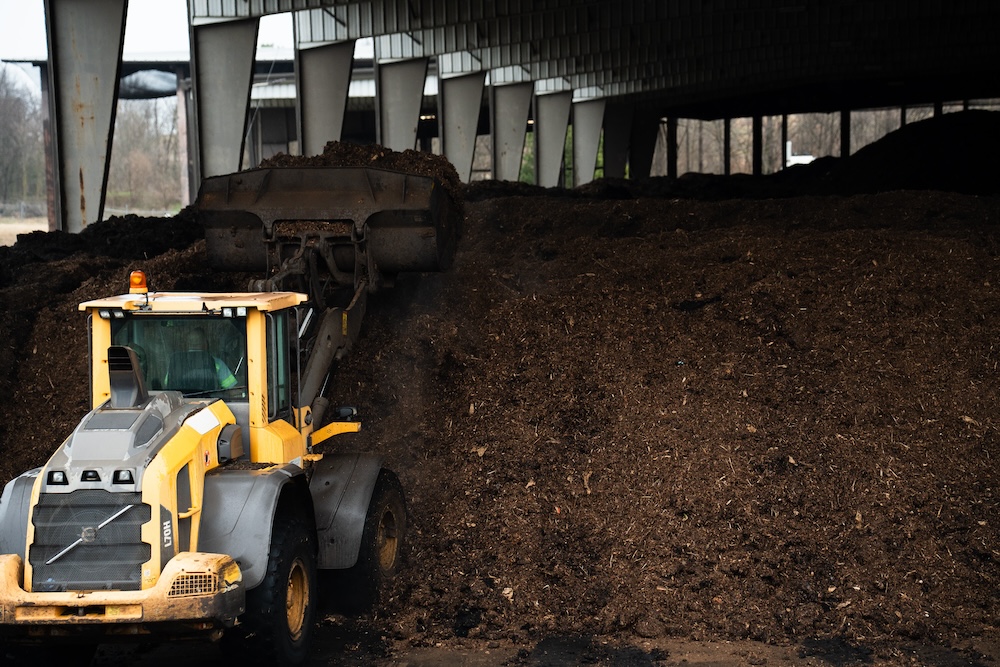
Once collected, the trees are ground into mulch at the yard waste composting facility just north of the landfill. That material is mixed with the city’s biosolids and food scraps — collected downtown and at select curbside locations — and composted. The finished product is sold to landscaping companies or blended with soil and sand for bulk use in gardens and construction.
Christmas trees, it turns out, are especially useful. Winter yard waste is otherwise dominated by leaves — light, fluffy material that resists grinding. Trees provide the dense carbon needed to weigh it down. “The grinder actually likes trees,” Williman said.
Christmas trees notwithstanding, January actually is not the busiest season for yard waste. That peak comes in summer, when grass clippings, tree trimming, land clearing, and construction debris flood the system. Development across Durham adds to that volume. Compared to that, winter is relatively quiet.
Occasionally, residents handle the disposal themselves, driving in to drop off their trees for free. On a recent Wednesday, a navy blue BMW X3 eased into the lot and stopped, its trunk popping open to reveal a Christmas tree wedged inside. The driver said she’d usually drop off trees at C.M. Herndon Park, but the site wasn’t accepting them this year, so she searched online for where to go instead. The process took minutes: unload, drive away, holiday officially over.
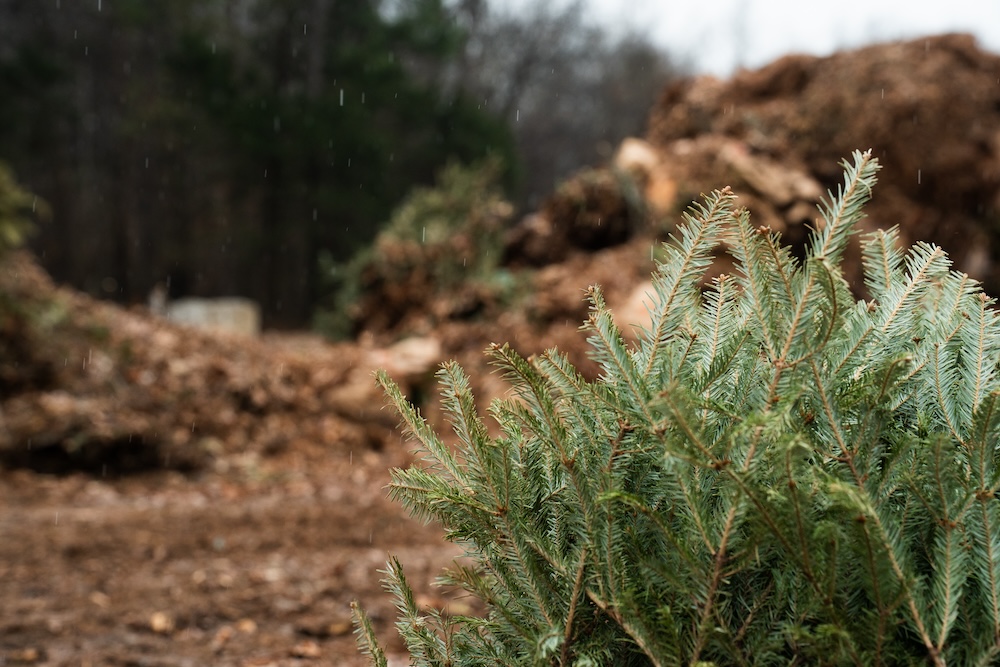
By noon, the grinder was still. The operator had finished for the day and the yard had quieted, the rain pattering softly into the mud. One tree remained, and the air smelled unmistakably of pine, sharp and sweet.
The work wasn’t done, only paused, part of a winter routine that unfolds over weeks.
The city’s message, Williman said, is simple: treat organic waste as a resource, not garbage.
“It’s not garbage,” Williman said. “It’s not waste.”
At top: Muriel Williman says city residents discard hundreds of trees each December. Photo by Courtney Yribarren — The 9th Street Journal
Valentina Garbelotto