This story has been updated with additional details. An earlier version incorrectly described Kaya Manson’s bird feeders. They are platform ground feeders, not troughs.
Carolina Chickadees cheep a pitchy “fee-bee-fee-bay.” The Eastern Gray Squirrel barks, not unlike a small dog. Raccoons whistle, squeal or screech as they wish. (Have we figured out what the fox says yet?!)
And at their Sept. 18 work session, the Durham City Council twittered about adopting an ordinance to ban residents from feeding wildlife in their yard.
The idea originates with Steven Harris, a resident of the Trotter Ridge subdivision, who said excessive wildlife feeding has attracted scurries of squirrels, resulting in more than $50,000 in damage on his street. He first addressed the council during the Nov. 7, 2024 work session, implicating one neighbor with “approximately 20 wildlife feeders,” according to a city report. The bushy-tailed woodfolk have chewed through car wires and fuel lines, as well as nested in chimneys and vehicle engines.
“I just want to go on record and say I lived in Trotter Ridge,” Mayor Leonardo Williams said at the work session. “I’m so sick of those squirrels… They cause havoc.”
But it’s unclear if there’s sufficient council support for a ban. A possible ordinance will appear before the City Council for consideration at the Oct. 9 work session. The change to Chapter 6, “Animals,” makes an exception for bird feeders as long as they are kept more than 5 feet above the ground. Once notified, property owners or residents must remove the violation within 48 hours.
Council Member Chelsea Cook, who endorsed the idea of an ordinance, said, “I don’t think I have any interest in criminalizing this activity, but I do think that an educational piece feels attractive to me.” Staff recommended Durham consider an educational guide to inform residents about the impacts and unintended consequences of feeding wild animals.
To be clear, the bird/squirrel brouhaha is not a major controversy. Harris’s complaint “is the only report received by the City to date on this issue,” City of Durham Communications Department Director Amy Blalock told The 9th Street Journal. Durham One Call did not report any history of complaints on this subject, either, though the reports are not comprehensive enough to track this specific complaint with high confidence, according to an Oct. 6 city memo.
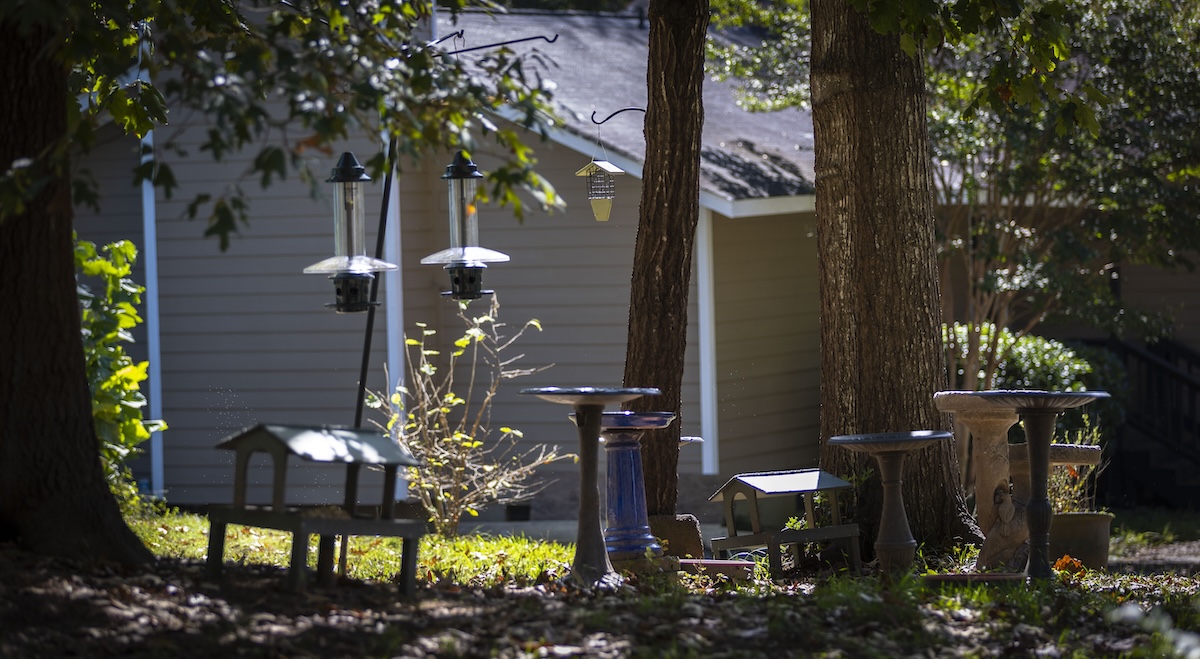
A stroll through Trotter Ridge leaves little question about which home Harris is referring to. What’s debatable, though, is which will catch your eye first: the brilliant blue exterior or bevy of bird baths filling Kaya Manson’s frontyard.
Manson’s fondness for birds and other animals has ruffled feathers in the neighborhood. Harris said Manson uses bird baths and open feeders to offer peanuts, whole pieces of fruits, and––at times—meat, not just to feathered friends, but all sorts of wildlife. A parade of deer here, pesky squirrels there. And on any given day, she’s known to have a murder of crows looming over her lawn.
“I mean, it is a menagerie of animals coming down to these open feeders,” Harris said.
Manson’s next door neighbors, Liz Burnette and Suzy Johnson, blame the squirrels for their tattered window screens, damaged roof and ruined car wires. (The word “rodent” derives from the Latin root, “rodere,” meaning “to gnaw.”) Burnette estimated spending $4,000 in repairs.
“The Jeep was going to be $2,300 to fix the electrical under the Jeep, so my sister just sold it,” Burnette said.
In the backyard, Johnson scoured the ground for peanut shells that critters would have brought over from next door. She piled scraps she found in a tupperware container. On several occasions, the couple has ripped up peanut plants that took root.
“Yeah, we just pick ‘em up and then throw ‘em over the fence,” Johnson said, nodding toward Manson’s Caribbean blue single-family home.
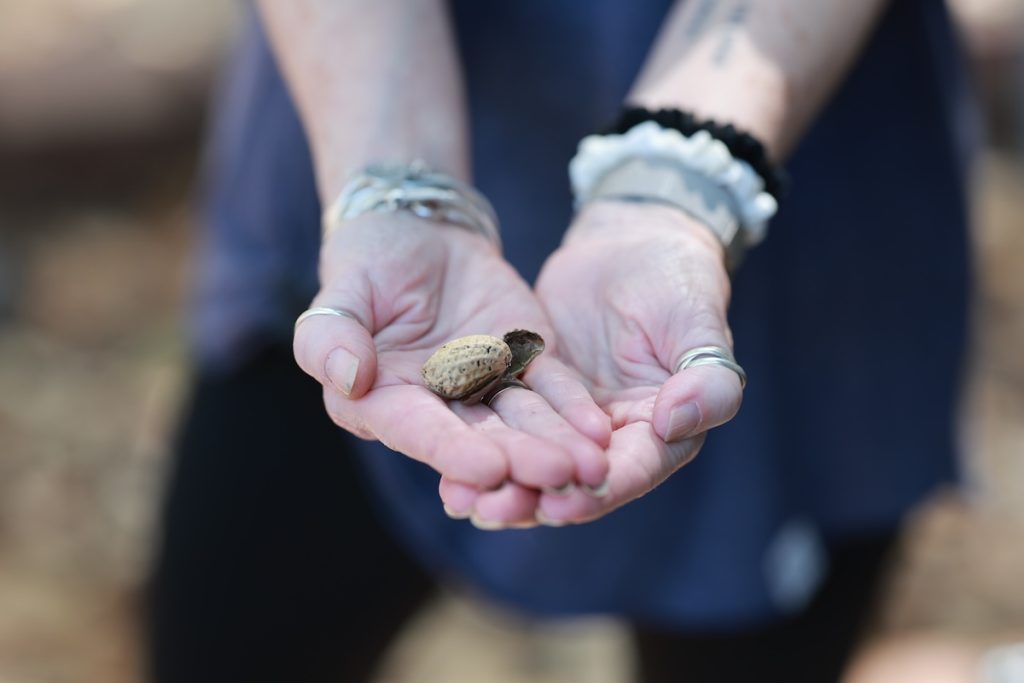
It wasn’t always that hue. The New York native said she wanted “a color that makes me smile.” Manson, 72, moved to Trotter Ridge in 2015. In her front yard, two platform ground feeders were filled with a tree nut blend. Several bird baths with water invited critters to linger. Three feeders dripped from overhead.
She said she doesn’t put out peanuts. (Dried leaves and peanut shells crunched beneath her footsteps.) Manson denied any causal connection between her front yard feeders and neighbors’ property damage. “Squirrels, by nature, are destructive to property,” she said.
Trotter Ridge residents have asked her to quit and reached out to various organizations— including animal control and North Carolina Wildlife Resources Commission—before approaching the Durham City Council.“It’s escalated into verbal altercations and just screaming matches among some of the neighbors,” Harris said.
After the Sept. 18 work session, Manson created a petition on Change.org, garnering more than 300 signatures to oppose any possible ban. “Taming wild animals and attracting them into residential areas is undesirable. However, the ban will regulate recreational and humane activities that do not contribute to this problem. These include: Bird feeders, feeding a stray or found cat or dog, feeding feral cat colonies for trap/neuter/release, feeding wildlife that does not create a nuisance or health/safety risk,” the petition states.
Manson regrets starting the petition, admitting she got the facts wrong. “I feel very bad if I misled people,” she said. She didn’t know how to edit her petition after already receiving signatures.
The ordinance going before the City Council Oct. 9 makes an exception for feeders intended for the common backyard birds. “Wildlife” is defined as “non-domesticated animals that inhabit the area.”
Hillsborough, Asheville and Buncombe County are the only North Carolina municipalities with wildlife feeding regulations. Asheville and Buncombe County aim at limiting attracting those areas’ abundant bear populations. Hillsborough does not enforce regulations with civil penalties, focusing on educational initiatives instead.
Photo at top: Platform feeders full of a tree nut blend, bird baths with water and overhead feeders decorate Kaya Manson’s front yard in Trotter Ridge. Photo by Dhruv Rungta – The 9th Street Journal
Gabrielle Lazor